
Tiger Reserves in kerala
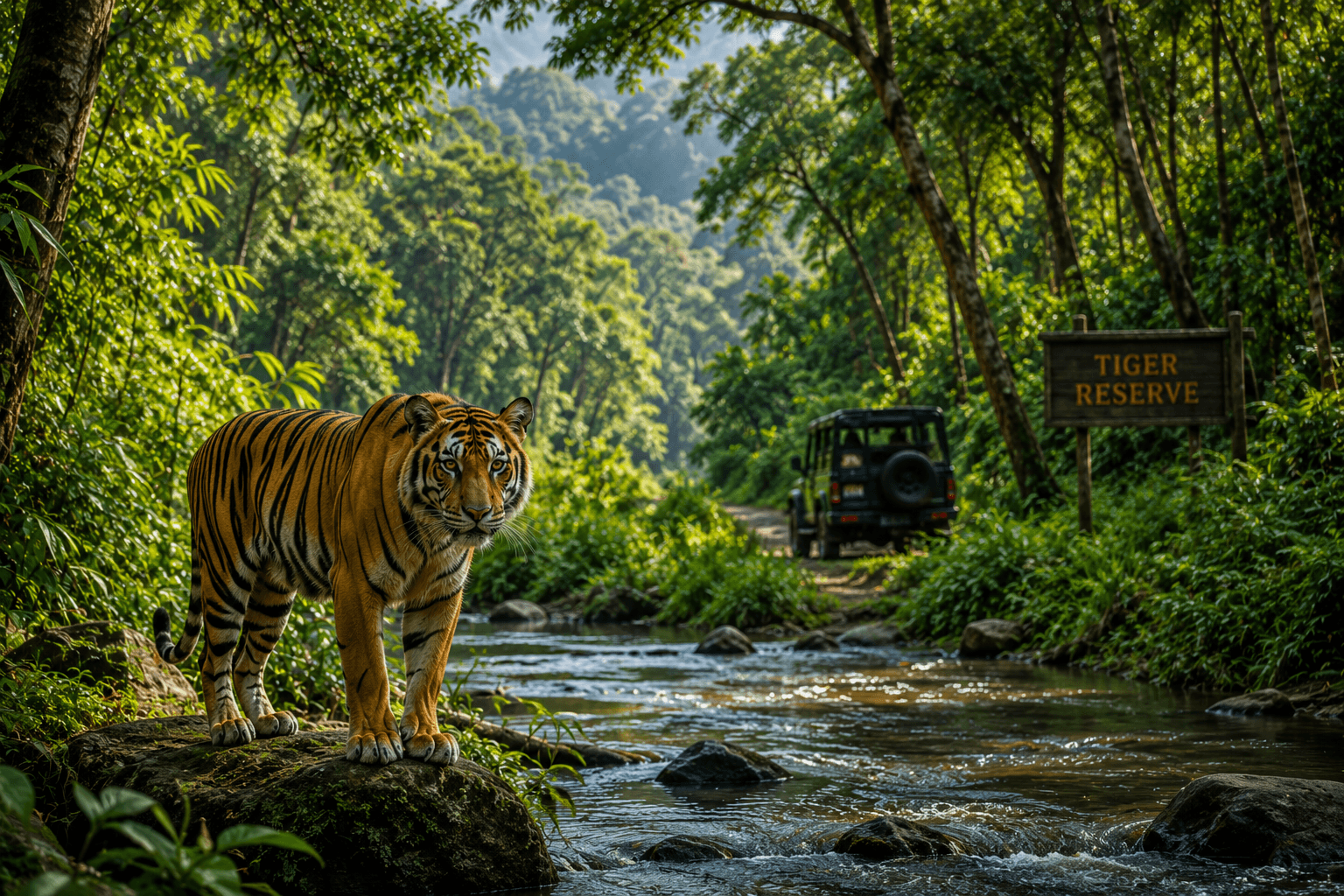
Tiger Reserves in kerala
Ultimate Guide to Tiger Reserves in kerala
Kerala cradles some of the richest biological zones within the Western Ghats, a UNESCO World Heritage landscape celebrated for its unique wildlife found nowhere else. By setting aside protected forests, the state guards its top predators. This makes the Tiger Reserves in kerala vital hubs for wildlife preservation across the nation.
These sanctuaries stretch across hundreds of square kilometers of thick evergreen trees, damp deciduous woods, and pristine waterways. Naturalists and scientists flock to these wild spaces to observe how healthy biological networks support large carnivores. This detailed guide explores the biological importance, protection plans, and travel rules linked to the premier Tiger Reserves in kerala.
Ecological Wealth of Tiger Reserves in kerala
The high slopes of the Western Ghats create an unusual terrain that feeds thick tropical canopies. Here, these wilderness zones serve as secure sanctuaries for rare animals. Tigers share these woods with Asian elephants, Nilgiri tahrs, and lion-tailed macaques.
Kerala manages two official zones dedicated to big cats, covering a combined expanse of more than 1,500 square kilometers. Run under the national Project Tiger scheme—introduced in 1973 to reverse the sharp drop in wild populations—these reserves receive federal backing. Official data from the 2026 wildlife census shows a steadying of tiger numbers here, a direct result of fierce anti-poaching patrols and woodland recovery work.
Periyar: An Early Model for Tiger Reserves in kerala
Established back in 1978, the Periyar territory is the oldest and most celebrated of the Tiger Reserves in kerala. Covering 925 square kilometers across Idukki and Pathanamthitta, this sanctuary encircles a historic reservoir formed by the Mullaperiyar Dam in 1895. Its strictly protected inner sanctum spans 350 square kilometers of untouched tropical canopy.
Wildlife records credit the area with hosting around 35 to 40 tigers. The watery setting lets sightseers watch wildlife from boats, a method that keeps human presence away from land trails. This sanctuary hosts 35 mammal species, including wild pigs, sambar deer, massive gaurs, and stripe-necked mongooses. The skies host over 265 bird species, such as the Malabar grey hornbill and the blue-winged parakeet, while king cobras and Malabar pit vipers rule the forest floor.
Parambikulam: A Crucial Segment of Tiger Reserves in kerala
Parambikulam joined the ranks as the second of the official Tiger Reserves in kerala in 2010. Tucked away in Palakkad, it covers 643.66 square kilometers, keeping 390.89 square kilometers completely wild as its inner core. The sanctuary boasts the ancient Kannimara Teak, a giant tree living for more than 475 years.
Waterways like the Sholayar and Thekkady rivers snake through the terrain, supplying water to resident animals. Native forest dwellers, including the Kadar and Malasar clans, participate directly in nature tourism and anti-poaching efforts. The local inventory lists 39 mammal species, 268 bird species, and 124 butterfly species. Sambar deer, Nilgiri langurs, and giant forest bison thrive under the thick leaf canopy, while mugger crocodiles sun themselves along the reservoirs under the watchful eyes of rangers.
Modern Protection Tactics in Tiger Reserves in kerala
Keeping top predators alive over generations demands steady field management and local cooperation. Forest officers work closely with local Eco-Development groups to lower neighborhood reliance on forest timber and plants. By offering alternative jobs to families on the forest borders, these groups have helped turn former hunters into dedicated wildlife guardians.
Daily foot patrols, hidden trail cameras, and fire-watching teams keep the wilderness secure. Forest pathways linking Kerala to neighboring wilderness areas in Tamil Nadu and Karnataka allow big cats to roam freely, preserving genetic health and avoiding the dangers of isolation.
Eco-Tourism Rules for Visiting Tiger Reserves in kerala
Mindful travel is vital to limit human disturbance in fragile wilderness zones. The Tiger Reserves in kerala offer tightly managed nature trips that teach the public about wildlife while raising money for forest defense. Guests must arrange vehicle safaris, bamboo raft trips, and forest hikes solely through the government forestry office. To protect animals from swallowing trash, plastics are completely banned past the gates.
Quiet behavior is mandatory during forest drives, and travelers must stay on marked roads to avoid disturbing nesting birds or rearing animals. Planning a trip between October and March promises cooler weather and better chances of seeing animals gathering near the waterholes.
Studying the biological setups within the Tiger Reserves in kerala underscores the value of hands-on preservation in saving our wild heritage. The positive outcomes in Periyar and Parambikulam show that careful land management paired with community tourism can stabilize rare animal numbers. Visitors must follow every forest rule to keep these sanctuaries wild. By backing local green programs, travelers play a direct part in protecting the Bengal tiger and the lush biological tapestry of the Western Ghats. Keeping these woods safe remains a major necessity for natural balance across the region.

All Categories
- Adventure Treks
- Best Ecotourism Destinations in Kerala
- Bird Sanctuaries
- District-wise Ecotourism Guides
- Ecotourism Destinations
- Famous Waterfalls
- Forest Walks
- Hidden Nature Destinations
- Hidden Waterfalls
- Monsoon Waterfalls
- Mountain Hiking
- National Parks
- Offbeat Places to Visit
- Tiger Reserves
- Trekking & Hiking
- Trekking Trails
- Uncategorized
- Waterfalls of Kerala
- Wildlife & National Parks
- Wildlife Photography Spots
- Wildlife Sanctuaries